180 degree rule
- charlotte2006lr
- Oct 17, 2023
- 3 min read
Updated: Oct 30, 2023
When filming scenes, to keep a constant flow of continuity we follow the 180 degree rule. Meaning that all the camera angles are shot on one side - rather than a mix of the actors sides. We tested this rule by following a script with a scenario on it.
When looking at my scenario we followed scenario 2, about two students, one on their phone and the other complaining about phones. This was simple to follow as we were given a script and to prepare we created a storyboard showing the shots that we have inferred from the script and how we may wanted the scenario to look.
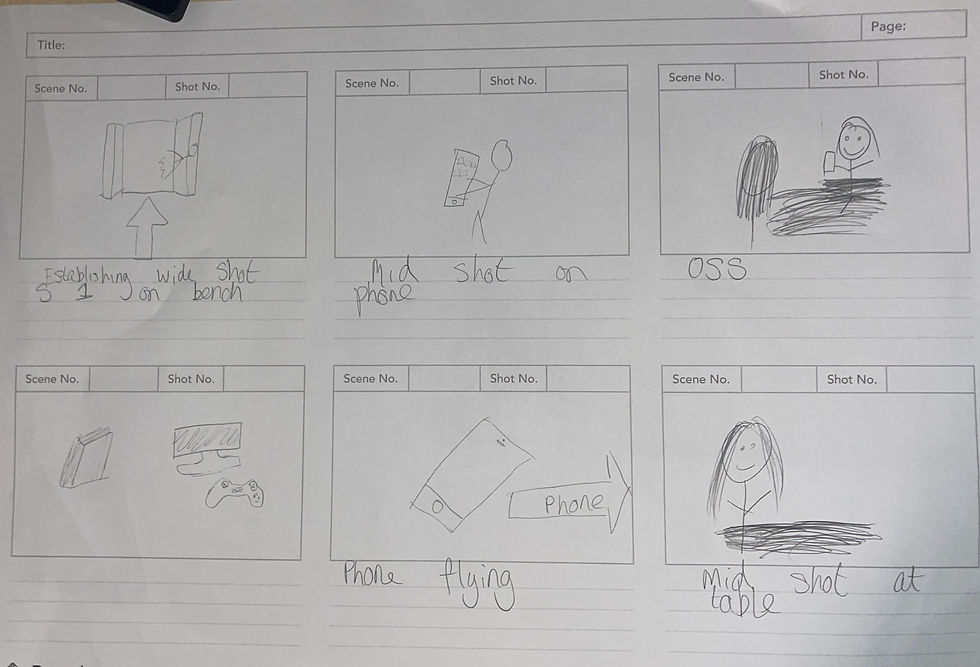
Our team worked well with communication to tell each other what we thought would work well, what shot decisions we could make and use to show the best of the 180 degree rule. We each spoke about what role we thought would be beneficial to the project, for example Ayla said that she would like to do the filming as she wanted to explore how the camera worked and see what could be changed to look better within the shots. Myself and Daisy said we would act in the scenario as it needed two people and interpreted the script using body language and facial expressions. However we all suggested things towards the cinematography.
When filming we needed to use a range of skills to make the video look the best (even though there are still things that we decided we would change). After researching the 180 degree rule, going through the script, creating the storyboard, assigning roles and going out to film we went over the certain angles we would use for each shot. We used this diagram to help visualise the rule.
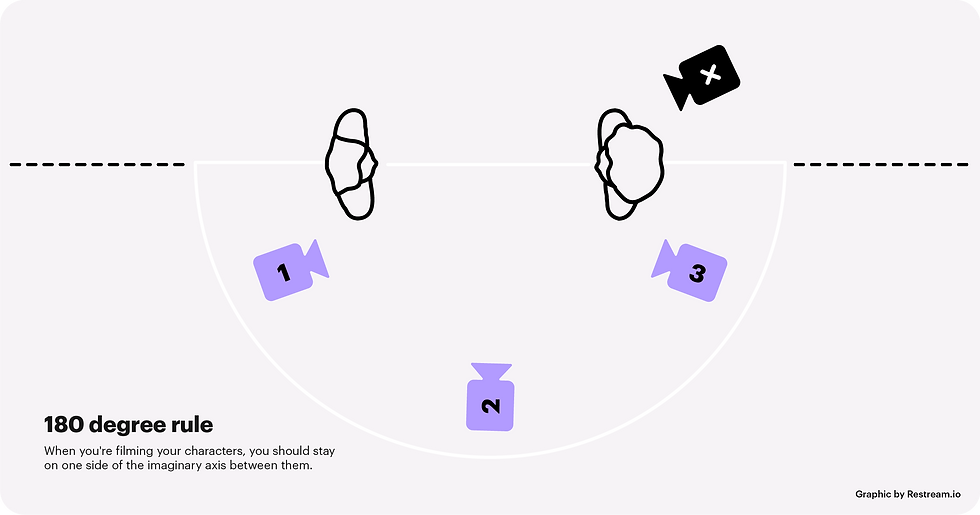
We used these individual shots.
This one was in the middle of the two characters. This is a mastershot and shows the context of the scene - a character sat at a bench on the school field. This is then used to capture both the characters.

This shot showed both characters on the left hand side.

Next shot is shown on the right hand side.
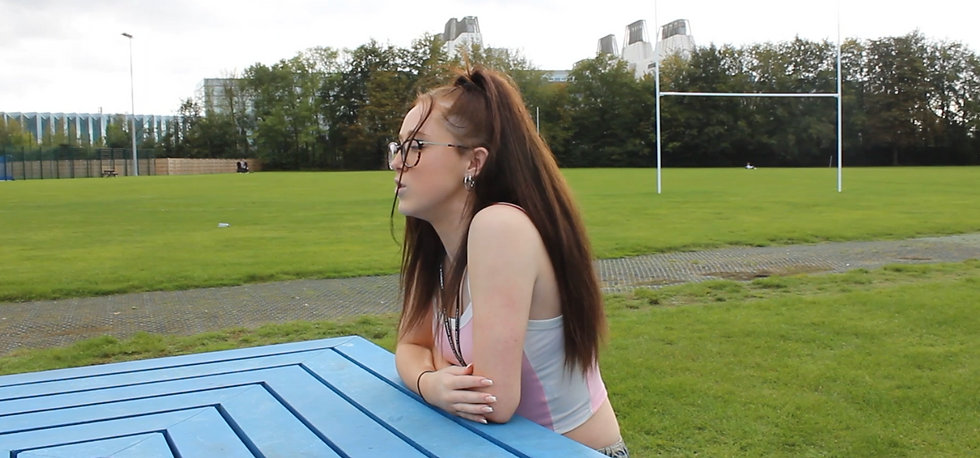
The final shot is once again a master shot at the same angle as the first one.

By using this rule, that meant that we showed our knowledge of the 180 degree rule.
One of the difficulties we faced was the weather. A few of our scenes in the scenario, do not have clear dialogue due to the wind breaking up the audio. This meant that to make the audience understand what was being said, I ended up writing subtitles of what was being said. I used PremierPro to edit my clips together and add the subtitles. This was fine as i have used this software before however did not add any audio this time.
The most frustrating aspect of filming this was dealing with the weather as we knew this would not make the film as good as we had hoped.
I would change my scenario video using the 180 degree rule by thinking more about the audio and what could be done to make the dialogue perfectly heard. I would also add audio, weather this is a backing track or a sound effect - potentially being when student 2 throws her phone. I would also colour correct the scene to have brighter colour as this is the raw footage used.
Comments