Interactive Media
- charlotte2006lr
- Nov 13, 2023
- 5 min read
Updated: Dec 10, 2023
Interactive media is used to engage with the audience, viewers, or customers. Interactive media can be represented through social media, virtual reality, video games, online virtual walks, and apps. However, a large increase in interactive media has been used in museums all over the world.
So why has interactive media become increasingly used in museums in today's society? This could be due to the narrative of museums being stereotypically "boring". There is a common idea of museums being boring due to it typically being just walking around looking at a display and reading an information tile on what the item/display is and what the history of the item/display is. Over the years, as younger generations have had their own children, many would not think to go to a museam because of the "boring" narative and as there is more things to do with children nowadays.
As technology has grown and developed over time, many museums have begun to change displays and exhibitions to make more people interested and take more from it. It is easy when looking at a display in a museum to look and walk onto the next thing, whereas in interactive museums they try to make you gain more information through the use of technology. Interactive media is also used to gain an emotional connection with the audience/visitors. Interactive museums are important to vistors and guests as they can give the audience a new way of looking at things and their surroundings. Inter

is a new museum in New York that showcases "extraordinary gadgets with stories and experiences that bring them to life". It has different sections of the
museum which relates to different topics. They use a range of multi-touch screens that can be interacted with and moved/selected to your liking to find out information. This shows that interactive media is making a rise in trends and as a result as it can lead to full exhibitions and museums itself using technology and branching of of it to create other interactive experiences. Here is a video showing SKYSCAPE.

Reviews for SKYSCAPE are mixed with many visitors saying it was either extreamly fun and something for all of the family whilst some say that the experience was too simple and short, however mostly it is all positive feedback. SKYSCAPE is a good representation of how the use of interactive media has been increased in museums worldwide. This is as majority of displays, are described as being "high - tech".
In 1991, the worlds first virtual museum was created. This was created by Jeffery Shaw and was in Frankfert. It represented virtual and digital concepts and used computer generated exibtes which emmersed customers.

This was one of the first most popular interactive media based exhibit and started up a trend of more to follow. Interteractive media museums are vastly growing and evolving all over the world with the most popular featuring in Ney York, France, Vienna, Singapore, Hong Kong, Amsterdam, Sweden, San Fransisco, London and Portugal.
The use of interactive media in museums can be beneficial to the exhibits as it can increase the range of viewers/interactions with the customers and viewers. This means that there is a potential wider range of target audiences. For example, many interactive media displays use audio and touchable features to help make the display more interesting. This could benefit people who may be blind as they can hear and feel what the exhibit is, whereas at a regular museum may not cater well to blind people as many exhibits are just visual based. Many exhibits in interactive museums over the world feature the use of audio as well as brail. With exhibits being more in touch with the senses, this could also mean there is a larger percentage of children getting involved as they might not be able to read but can listen and feel things. If there is a large amount of children visiting there will be a large amount of families involved in this.

This could also be inferred as the interactive element of the museum could be historically related - suiting best to parents or grandparents and the children will take interest as this is interactive so is not "boring" like most museums. Interactive museums are typically more acsessable for people sensory wise (for instance they are interactive so people with different disabilities can use them) however depending on the location physical layout of the museum and space, some museaums might not be best for wheelchair users. With the larger range of acsessable interactions, interactive museums may be more successful as they can reach more audiences, satisfy needs of many whilst still being interesting/more interesting than regular museums. In this image, we can see a display at a lower level, making it easier for children or wheelchair users see the display. As well as this, in an age where children are being brought up around technology, the name "Digital Natives" has been given to children who are constantly on phones and tablets. Intereactive museums could help break the cycle. This could be as the museum exibits could excite and interest the "digital natives" and even though it is technology it can make them get off of their phones or tablets. Once again gaining more interest in exibits from different groups of people.
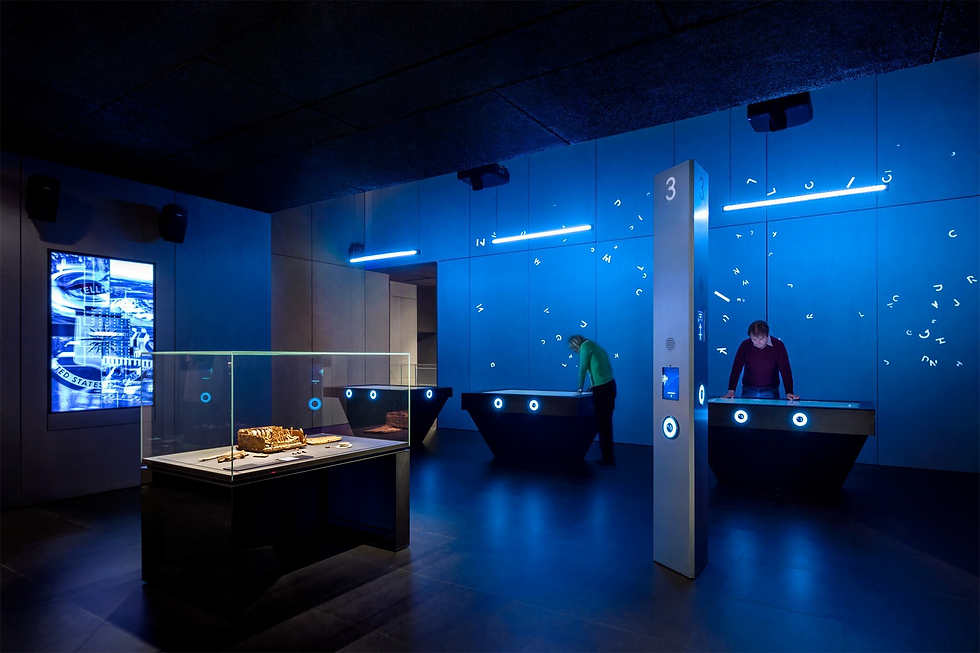
Bletchley Park is a museum in Milton Keynes where in WW2 codebreakers deciphered the secret communications used by Germany. After finding the code and using the German Enigma Machine, they helped bring an end to the Second World War. This code was found at Bletchley Park and later the Bletchley Park Trust was founded to keep the site in good condition and in 1993 it was made into a museum. Over the years, exhibitions have changed and recently more interactive media has been used. Bletchley Park - Wikipedia The Intelligence Factory | Bletchley Park

For example, Bletchley Park has a range of interactive tables in their displays. These are used by the viewers pressing buttons or physically swiping the screen to then have a pop up with information. These tables are used quite often in interactive media museums across the world. They are good a good form of interactive media as they can be slightly more interesting to learn from compared to a display with a plaque on.

They also feature rooms like this one showing the history of computers and coding. In this display, visitors are able to sit down and try to program, code or play old games an older computer. This is a good way of educating the visitors as it means they can experience what it is like on one of these machines.

This image shows one of Bletchley Parks new exhibits. It is about the intelligence created and used at Bletchley park. It is described as an "immersive cinematic experience". This features screens going around the viewers to fully put them in the video and moment.
Interactive museums get the media technology from certain companys who manufacture them. This could feature usage of TV's and screens showing displays. However, tables and interactive wall displays can come from companys such as CleaverTouch :

or Intuiface:
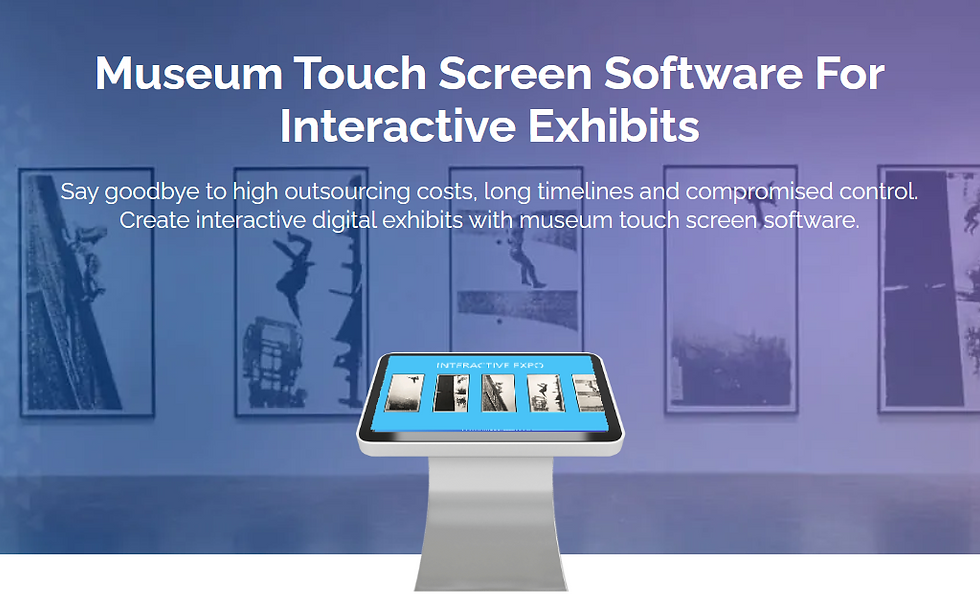
These companys manufacture and sell the screens and display methods that museums use. These displays can be programmed and changed to fit what the museum is showing.
Comments