Reality of documentary's
- charlotte2006lr
- Jan 9, 2024
- 5 min read
Updated: Jan 15, 2024
Looking at documentary's, the audience can learn and understand how subjective truth is used. How documentary's are made and structured can effect the way the audience feel about a documentary and how they then react to it. For example, if the documentary is emotional, the audience will feel captured by it and will want to tell other people - resulting in an increase in views and could result in more open talks about the documentary.
Looking at the short film Backflip we can learn how the film maker tries to capture the audience through using AI technology to learn a backflip. Backflips without training or experience can be quite difficult and dangerous and the filmmaker said that he is scared to try one. This is the story the audience follow.
I like the documentary as the film maker, Nikita, has put lots of though into the science, background and logistics of how to actually do a backflip. Backflip is told by the own film makers perspective making it more challenging seeing that the film maker has never done one before and they are highly dangerous. I think the use of using an AI avatar changes the average video/documentary on people trying to learn how to do a backflip and therefore uses comedy (showing the many fails of getting the AI to actually do a realistic backflip) to keep people entertained.

Adding to that, people learning how to do backflips gain millions of views (like this video by Mike Shake with 4.6 million views) due to the risk of injury. This is what I think Backflip has done well. The fact that the film maker has not had to physically learn to do a backflip and has just had to program AI. Also the way that the film maker has looked into science of angles, balance and the steps such as starting with a cartwheel and "learning from mistakes". Something that I dislike would be the length of the documentary. I would say that for the content that is shown. lots of it is not needed and makes it unnecessarily long. This is because for a large section of the documentary shows Nikita's avatar just attempting to flip and ends up crashing into things instead - this is what adds to the comedic effect. However, there is too much, making it long and slightly becoming boring and repetitive, making the audience loose interest. Furthermore, the film maker uses scientific terminology paired with comedy to interest the audience.
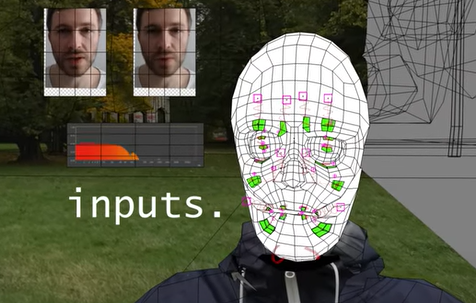
Backflip follows the very current trend of the use of AI. With technology developing and expanding, artificial intelligence is getting stronger and is being used more frequently. In this documentary, we never see the film maker in flesh, only through AI. He shares that the avatar is his "clone" and was created through an image of him standing in a park and him talking for "15 minutes into a voice cloning algorithm". By mentioning this, the film maker really emphasizes to the audience how much AI can do in such a short amount of time. The use of AI (regardless of the fact the whole documentary is completely made from artificial intelligence) was most likely the hardest part of the documentary as often when programmed it does not come out the exact way it was was wanted, showing glitches and a lack of continuity that would have remained if AI was not used and it was just filmed regularly.

Whilst the documentary is somewhat of a true representation to how learning a backflip may be, I do think a lot of it would be likely false. Whilst in real life you may start off with a cartwheel and then move to a softer surface, the more comedic element of the AI avatar falling and hitting his head causing a loud crash, or falling into the splits and being unable to get up or jumping into a wall causing pictures to fall down would most likely not be a truthful representation of learning a backflip. The other main key factor of why this would not be truthful is the fact that the whole documentary is completely computer software obviously not being truthful and an accurate representation of learning a backflip.
"Hanging on" is an experimental documentary which features the voices of the residents of Wordsworth Drive and Sugar Hill close in Leeds. They each explain how they have lived on the estate for years and their rent had been tripled and they had been sent a leaflet about new houses being built - knocking down the houses already there. They explain how this is unfair and wrong and their feelings towards it. I like this as some audience members will never have to experience being evicted and cannot understand what this may feel like. I think that "Hanging on" really emphasize the emotion of the residents as they talk about the community that they live in. I also like the metaphorical value of the people floating in the air as they explain that they are "hanging by their finger nails" in this financial and ecological situation. However something I dislike about it is how when one of the residents explain that their rent has been tripled and uses the metaphor of "hanging on by their finger nails" (the title of the documentary) it takes a longer amount of time to be said.

Themes that are discussed in Hanging On would be surrounding economic and ecological acts. How the plot of land that these residents houses are on has been sold and the people were going to be evicted and made homeless. They share the upsetting fact that many of them had lived on the estate for a long time and that this does just effect one household it was going to effect everyone, We could also link this to politics as this is just allowed to happen. Hanging on reflects on social injustice.
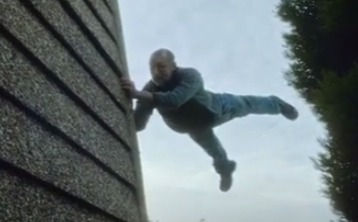
Whilst the clips of the residents floating in the air are obviously not an accurate representation of what happened, the dialogue and which is represented by the clips from inside peoples houses give a narrative account of what happened, what was said and how that made them feel. This is a good representation as it is first hand and really explains their true feelings and experiences.
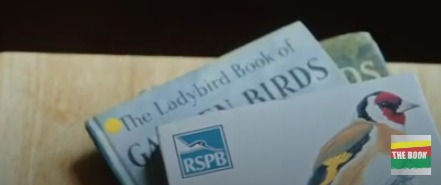
Hanging on shows the perspective of multiple people and couples living on that road. They refer to each over with their names showing just how long they have all known each other. In this clip they discuss what birds they have in they're gardens and they say that down the street Cindy has a different type of bird in her garden. This emphasises the relationship that they have - being a community.

I think the hardest part of this documentary would be setting up having the people floating through the air. This would be difficult as it would require harnesses and set ups and lots of support to help it take place.
One of the techniques that the film makers use would be pathetic fallacy. It often uses low key lighting and dark colour schemes in this documentary, this emphasises the darkness and the sadness that the residents are going through and explains to the audience that the residents lives will be changed. This grabs the audience as it can make them feel emotional and interested in what is going to happen.
Comments